Why Rust?
Why Systems Programming Languages Matter
Importance of Systems Languages:
- Essential for building operating systems, databases, and infrastructure
- Provide fine-grained control over system resources
- Enable optimization for performance-critical applications
- Foundation for higher-level languages and frameworks
Performance Advantages:
- Generally compiled languages like Rust are needed to scale to large, efficient deployments
- Can be 10x to 100x faster than equivalent Python code
- Better memory management and resource utilization
- Reduced runtime overhead compared to interpreted languages
Memory Safety: A Critical Advantage
What is Memory Safety?
Memory safety prevents common programming errors that can lead to security vulnerabilities:
- Buffer overflows
- Use-after-free errors
- Memory leaks
- Null pointer dereferences
Industry Recognition:
Major technology companies and government agencies are actively moving to memory-safe languages:
- Google, Microsoft, Meta have efforts underway to move infrastructure code from C/C++ to Rust
- U.S. Government agencies recommend memory-safe languages for critical infrastructure
- DARPA has programs focused on translating C to Rust
- CISA (Cybersecurity and Infrastructure Security Agency) advocates for memory-safe roadmaps
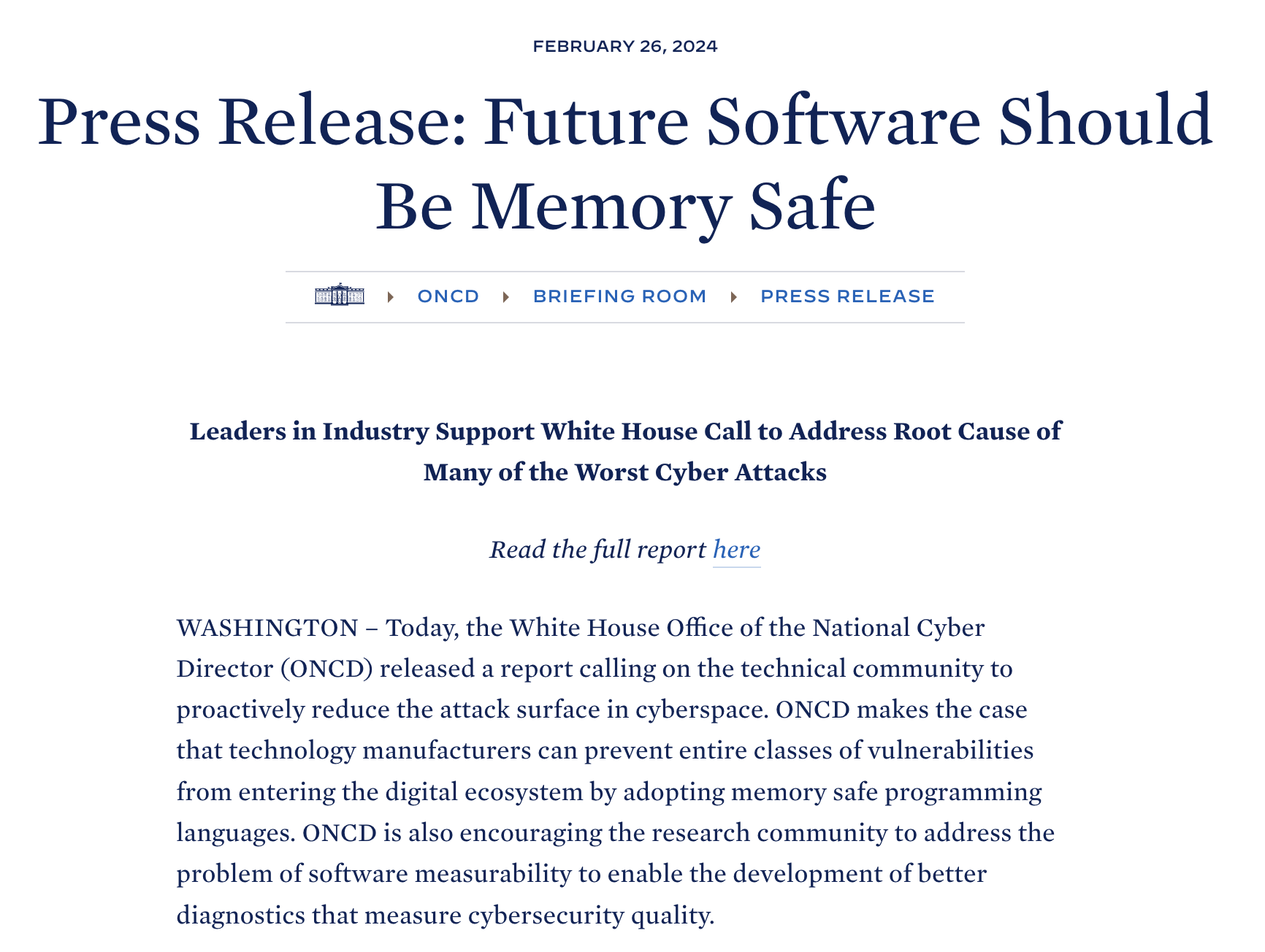
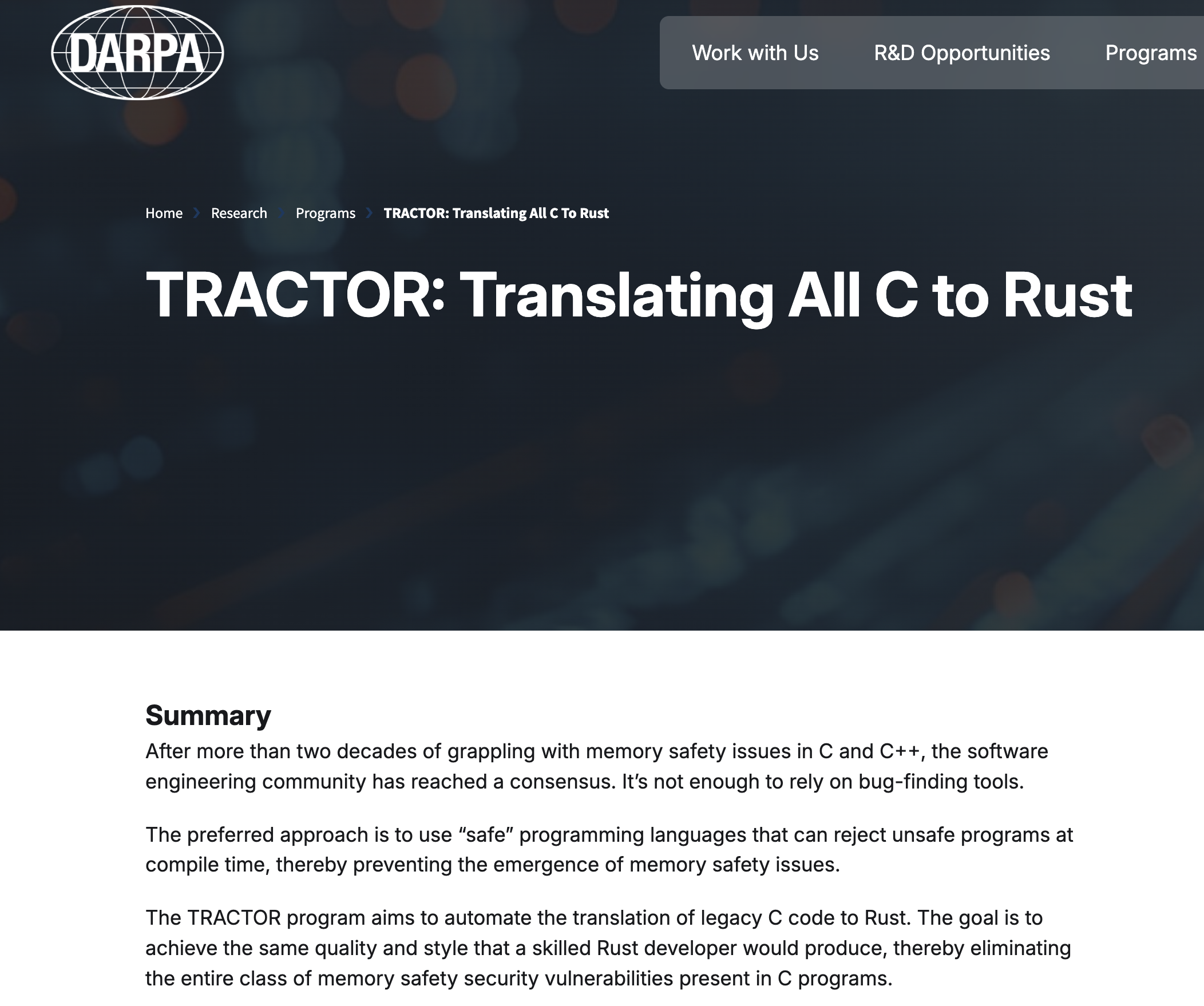
 CISA -- The case for memory safe roadmaps
CISA -- Cybersecurity and Infrastructure Security Agency
CISA -- The case for memory safe roadmaps
CISA -- Cybersecurity and Infrastructure Security Agency
Programming Paradigms: Interpreted vs. Compiled
Interpreted Languages (e.g., Python):
Advantages:
- Interactive development environment
- Quick iteration and testing
- Rich ecosystem for data science (Jupyter, numpy, pandas)
- Easy to learn and prototype with
Compiled Languages (e.g., Rust):
Advantages:
- Superior performance and efficiency
- Early error detection at compile time
- Optimized machine code generation
- Better for production systems
Development Process:
- Write a program
- Compile it (catch errors early)
- Run and debug optimized code
- Deploy efficient executables
Using Rust in a Jupyter Notebook
The project EvCxR (Evaluation Context for Rust) creates a Rust kernel that you can use in Jupyter notebooks.
- Can be helpful for interactive learning
- There are some quirks when creating Rust code cells in a notebook
- Variables and functions are kept in global state
- Order of cell execution matters!
- Previous versions of the course notes used this format
We use Rust mdbook with code cells that get executed on the
Rust playground.
Same format that the Rust language book is written.
Technical Coding Interviews
And finally...
If you are considering technical coding interviews, they sometimes ask you to solve problems in a language other than python.
Many of the in-class activities and early homework questions will be Leetcode/HackerRank style challenges.
This is good practice!